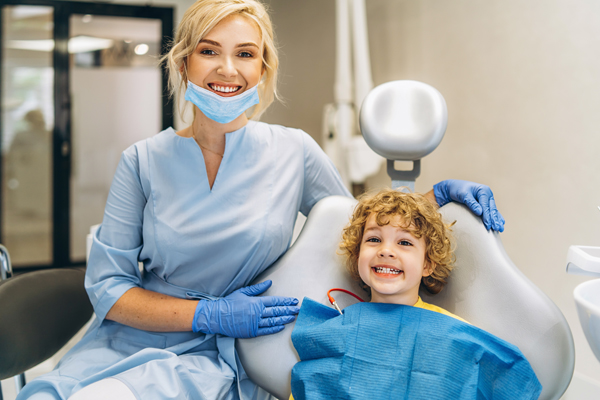
Parents often come to a pediatric dental checkup with a few concerns in mind. Being prepared with questions can help families make the most out of the visit. After all, a child’s dental needs change quickly, especially as baby teeth fall out and daily routines become more independent. Thankfully, a pediatric dentist can provide guidance that fits the child’s stage of growth, comfort level, and individual needs.
5 questions to ask at a pediatric dental checkup
A pediatric dental checkup gives parents an opportunity to learn how their child’s teeth, gums, bite, and oral habits are developing. It is encouraged to bring a list of any concerns so that they can be addressed during the appointment. For those who are not sure where to start, here are five helpful questions parents and guardians often ask:
Is my child brushing and flossing effectively for their age?
What counts as "good enough" can depend on a child’s age and coordination. It is common for young children to need help from their caregivers with brushing and flossing, because they may miss the back teeth, rush through brushing, or use too much pressure in one area while missing another. Older children may want to brush independently, but they may still need reminders from their caregivers and occasional help with technique. A pediatric dentist can evaluate whether the teeth appear clean and whether plaque tends to accumulate in certain areas.
Moreover, asking this question during a pediatric dental checkup helps caregivers learn when to adjust the routine. Some children need a smaller toothbrush, a different brushing angle, or more support with flossing between certain teeth. The goal is to ensure the child's teeth are thoroughly cleaned while encouraging them to develop their own oral hygiene routine.
Are there any early signs of cavities or weak spots in the enamel?
Cavities do not always cause pain in the beginning. A child may feel completely fine even as early enamel changes are already underway. During a pediatric dental checkup, the dentist looks for white spots, soft areas, grooves that trap food, and other signs that a tooth may need closer attention. Finding these signs early can give families more options, such as stopping a small issue from turning into a large cavity.
Are my child’s baby teeth and permanent teeth coming in on schedule?
Children do not all lose baby teeth or get permanent teeth at the exact same time. That said, certain patterns help a pediatric dentist understand whether smile development is on track. During a pediatric dental checkup, the dentist can check which teeth are present, which teeth may be loose, and whether permanent teeth appear to have enough room to come in properly. Dental X-rays may also help show what is happening below the gums when needed.
This question can be especially helpful when a baby tooth stays in place longer than expected or falls out early. If a tooth is lost too soon, nearby teeth may shift into the open space, making it harder for the permanent tooth to erupt properly. Or, if a baby tooth does not loosen on schedule, the dentist can check whether the permanent tooth is developing normally. Regular monitoring helps parents understand what to expect, rather than guessing.
Does my child’s bite look normal for their age?
A child’s bite affects how the upper and lower teeth come together during chewing, speaking, and closing the mouth. Some bite changes are part of normal growth, while others may need closer monitoring. A pediatric dentist can check for signs of an overbite, underbite, crossbite, or open bite and explain whether the pattern looks typical for the child’s age. This does not always mean orthodontic treatment is needed right away.
Are there any signs of crowding, spacing, or jaw development concerns?
Crowding, spacing, and jaw development can be hard for parents to evaluate at home. Some gaps are normal when baby teeth are present because they may provide room for larger permanent teeth. Crowding, however, may suggest that there is not enough space for teeth to erupt comfortably. A pediatric dentist can look at the full picture and explain whether the child’s smile needs monitoring or whether an orthodontic evaluation may be helpful later.
Schedule a pediatric dental checkup
Dental checkups are an opportunity to assess a child’s oral health and address any concerns. A pediatric dentist strives to help parents and guardians feel confident about children’s dental care. For more information, contact Memorial Pediatric Dentistry. We are proud to serve families in Houston and the surrounding communities.
Request an appointment here: https://www.memorialpediatricdds.com or call Memorial Pediatric Dentistry at (281) 571-8411 for an appointment in our Houston office.
Check out what others are saying about our services on Yelp: Read our Yelp reviews.
Recent Posts
Your child may need a pediatric root canal after an accident or severe decay. Any type of dental damage could infect the pulp. The dentist will explain how this treatment can correct the situation. Here are the details on how a pediatric root canal can keep your child’s tooth intact.Pain in a child’s tooth may…
A pediatric root canal is often a final resort for a dentist who is trying to save a child’s tooth. When a cavity has become so severe that it has progressed into the innermost pulp chamber of the tooth, removing the pulp and performing a root canal is the best option for enabling the child…
A pediatric root canal is one of the most common procedures that a dentist may have to perform on a child. It often has the stigma that it is uncomfortable or highly involved, but in reality, a pediatric root canal can be simple and pain-free.If your child needs a root canal, they may feel nervous…
A pediatric root canal is a safe and effective procedure often necessary to save a severely decayed or infected tooth. However, following a thorough post-treatment plan is just as important as the procedure itself. The right post-procedure care ensures your child heals properly and maintains a bright and happy smile.A pediatric root canal is where…