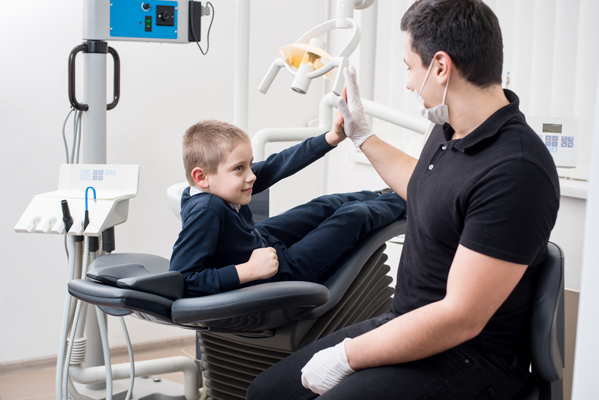
Pediatric dentists specialize in providing children's dental care services to help set the foundation for their oral health. These services can range from preventative to corrective. However, as a parent, gaining the understanding and tools necessary to support your child in their oral health journey can leave a lasting positive impact for many years to come.
The role of a pediatric dentist
Pediatric dentists play an integral role in a child's overall development. The dental professionals are trained in caring for patients ranging from infants to teenagers. To be considered a licensed dental professional in the United States, one must receive a bachelor's degree from an accredited institution and complete four years of dental school. Pediatric dentists must continue their education, completing two to three years of training and residency, specializing in dentistry for infants, children, and those with special needs.
The importance of visiting a pediatric dentist
The American Academy of Pediatric Dentistry, or AAPD, recommends that children begin seeing a pediatric dentist biannually when their first tooth erupts or at least by 12 months of age. Pediatric dentists can detect threats to the development that stems from their oral health or structure and provide appropriate children's dental care services. For example, gum disease can affect infants in the same way it does adults. It can eat away at their soft tissues and work through their already soft jawbone, causing facial deformities and preventing teeth from growing properly.
Additionally, the sooner a pediatric dentist is introduced into a child's life, the more likely the fear and anxiety associated with visiting the practice will dissipate. This can foster a healthy and positive relationship for many years, helping dentists educate and provide practical methods for children to keep up with their oral hygiene between appointments as they grow.
The anatomy of children's teeth
According to Johns Hopkins Medicine, baby teeth begin developing while the child is still in the womb and only erupt if properly nourished. The first tooth usually erupts at six months of age. As the child grows, the incisors, molars, canines, and cuspids will have erupted, usually by 33 months of age. The wisdom teeth develop and erupt later, usually not until the late teens to early 20s.
Contrary to popular belief, teeth are not bones. They comprise various tissues ranging in hardness. The enamel is the outer layer of the tooth, housing the dentin. Beneath the dentin is the pulp and the root of the tooth itself. The pediatric dentist will provide appropriate preventative and restorative services to keep each layer healthy and intact until it is ready to fall out, as it acts as a precursor for the not-yet-developed adult teeth.
Preventative children's dental care services
Preventative children's dental care services refer to interventions that prevent oral conditions from occurring or strengthen the teeth to better fight off threats. Common services include biannual cleanings, fluoride treatments, and dental sealants.
Biannual cleanings allow the pediatric dentist to interrupt poor oral habits or oral hygiene in patients. They can remove plaque, a bacteria-filled substance, and tartar — calcified plaque — before they can cause decay or disease. Cleanings also allow the pediatric dentist to view the exposed and underlying structure, ensuring no abnormalities develop.
Fluoride treatments use highly concentrated fluoride solutions to strengthen the enamel. These treatments can make it increasingly hard for decay to develop and damage from general wear as the patient adds more foods to their diet. Dental sealants, on the other hand, make it difficult for decay to occur in the most common areas of the mouth — the molars. Sealants are coatings that smooth over the grooves etched into these teeth, preventing bacteria and food debris from becoming trapped inside them.
Restorative children's dental care services
Restorative services are sometimes necessary to maintain children's oral health. Common procedures include fillings, crowns, and space maintainers.
Fillings address small holes left behind from decay removal. They consist of amalgam (silver), porcelain, or composite resin materials that fill in the hole, protecting the tooth from further damage. The dentist may employ a crown or cap to completely engulf a vulnerable or damaged tooth, salvaging it until it is ready to fall out. Lastly, space maintainers are for children who lose teeth prematurely, a common childhood occurrence. These small oral appliances help maintain the space left behind by a missing tooth, preventing the gums from receding and the socket from closing. This allows the adult teeth to have a path to erupt through.
Schedule your child's next appointment
Is it time for your child's next dental appointment? Contact the Memorial Pediatric Dentistry Houston office to schedule an appointment. We provide children's dental services to help them be successful in their oral development.
Request an appointment here: https://www.memorialpediatricdds.com or call Memorial Pediatric Dentistry at (281) 571-8411 for an appointment in our Houston office
Check out what others are saying about our dental services on Yelp: Routine Dental Care in Houston, TX.
Recent Posts
Wondering when a child should have their first pediatric dental checkup? Read on to learn more. Parents should prioritize their child's dental health. A part of that process is learning about the pediatric dental checkup and when to plan the child's first appointment. If your child is visiting the dentist for the first time, they…
Proper dental hygiene in children is as important, if not more so, than adults. Kids' dental hygiene and health can determine many factors about their dental health in the future, such as gum health, teeth placement and oral hygiene. Without proper care, a child’s dental routine could cause issues for them later in life. One…
Special needs dentistry focuses on meeting the unique requirements of patients with physical, developmental, or behavioral conditions. By providing compassionate, tailored care, we can ensure that every patient can receive high-quality dental services in an environment that fosters trust and understanding. Special needs dentistry can promote lifelong oral health and enhance overall well-being with the…
Pediatric dentistry is a field of dentistry that deals with the oral health of children. Parents need to choose a pediatric dentist who is experienced and qualified to care for their child's teeth.Here are some things to consider when choosing a pediatric dentist:The pediatric dentist should be certified by the American Board of Pediatric Dentistry.…